
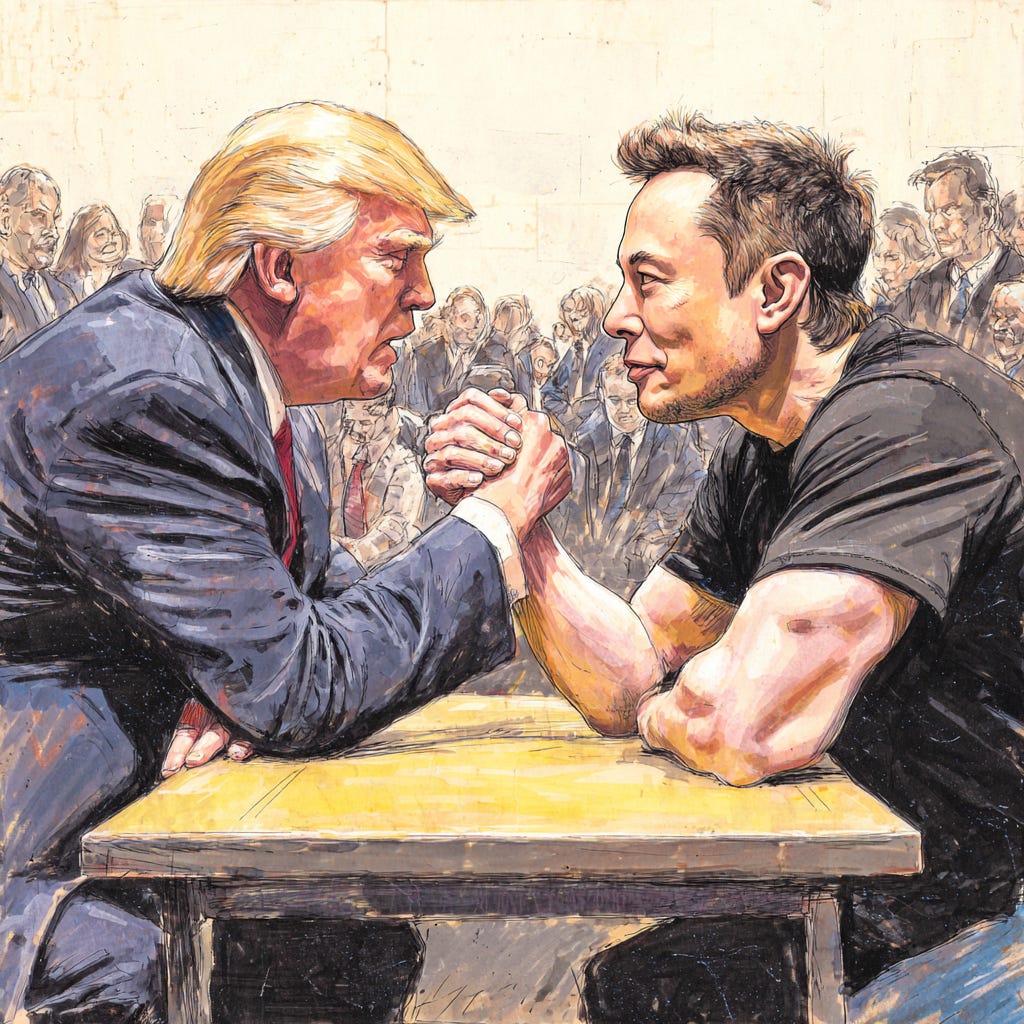
Not long ago, it was natural to believe that presidents, prime ministers, and elected officials were the ones shaping society and steering our collective future. Governments passed laws, set policies, and decided the course of nations. But that belief no longer holds much weight. The uncomfortable truth is that the true architects of modern life are not our political leaders, they are the unelected, unaccountable emperors of technology. The trouble is with our current leaders, neither option is great; caught between a rock and a shit place.
So how did we get here? Somewhere along the way, power shifted. We handed it over willingly like a digital offering, click by click. Our increasing dependence on technology (and for many, our addiction to it), has placed tech companies in an unprecedented position of authority. We gave them what every ruler craves: attention. In return, they built empires from our habits, our data, and our desires. The result is that these corporations now wield more influence over our daily lives than most governments ever could.
Recently, the line between political and technological power blurred in full view, when Elon Musk, arguably the most visible of today’s tech moguls, found himself entangled in the upper echelons of U.S. government discussions. The ease with which he entered those circles, and the chaos that followed, was a glimpse into a future where corporate and political bum-chums collide in dangerous ways. Only the clash of personalities and egos on this occasion prevented an even more alarming alignment of interests, but it also revealed just how fragile democratic boundaries have become.
Emboldened by our constant consumption and unquestioning adoption of every new app, platform, and device, the tech industry has grown wealthier than the very governments meant to regulate it. And while governments are bound by public accountability, corporate giants answer only to shareholders — if that. Their products shape culture, communication, and even thought itself, yet they operate with minimal restrictions and seem motivated by profit not principle. That would be similar to many businesses, but for the fact they’re being steered by bosses with a moral compass Adolf Hitler would be proud of.
Attempts at regulation are met with fierce resistance. The industry’s standard defence is as predictable as it is effective: any restriction, they claim, will stifle innovation and allow China to dominate the technological landscape. It’s a convenient argument, one that preys on geopolitical fears while keeping regulators at bay. And so, rather than reining in tech’s growing dominance, most governments tiptoe around it — terrified of appearing anti-innovation, or worse, irrelevant. Politicians still influence some areas but the over-arching direction of humanity is being shaped by tech.
This raises many questions. If the institutions that once safeguarded public interest are now beholden to corporate power, who is really governing us? And what happens when the algorithms that shape our perceptions, also influence the very decisions of those we elect?
I don’t pretend to have easy answers; China may well dominate if we regulated those in the West. That this may be a better option than where our Tech Titans are taking us, only proves the problem. But I do know this: the balance of power has shifted too far, too quietly. If governments continue to shrink in authority while tech empires expand unchecked, we risk losing not just control of our data, but control of our destiny. Reclaiming it will require more than regulation — it will require remembering that technology was meant to serve humanity, not the other way around.
I fear it may be too late. We gave up agency for convenience a long time ago. But also: https://www.youtube.com/watch?v=mmo3HFa2vjg